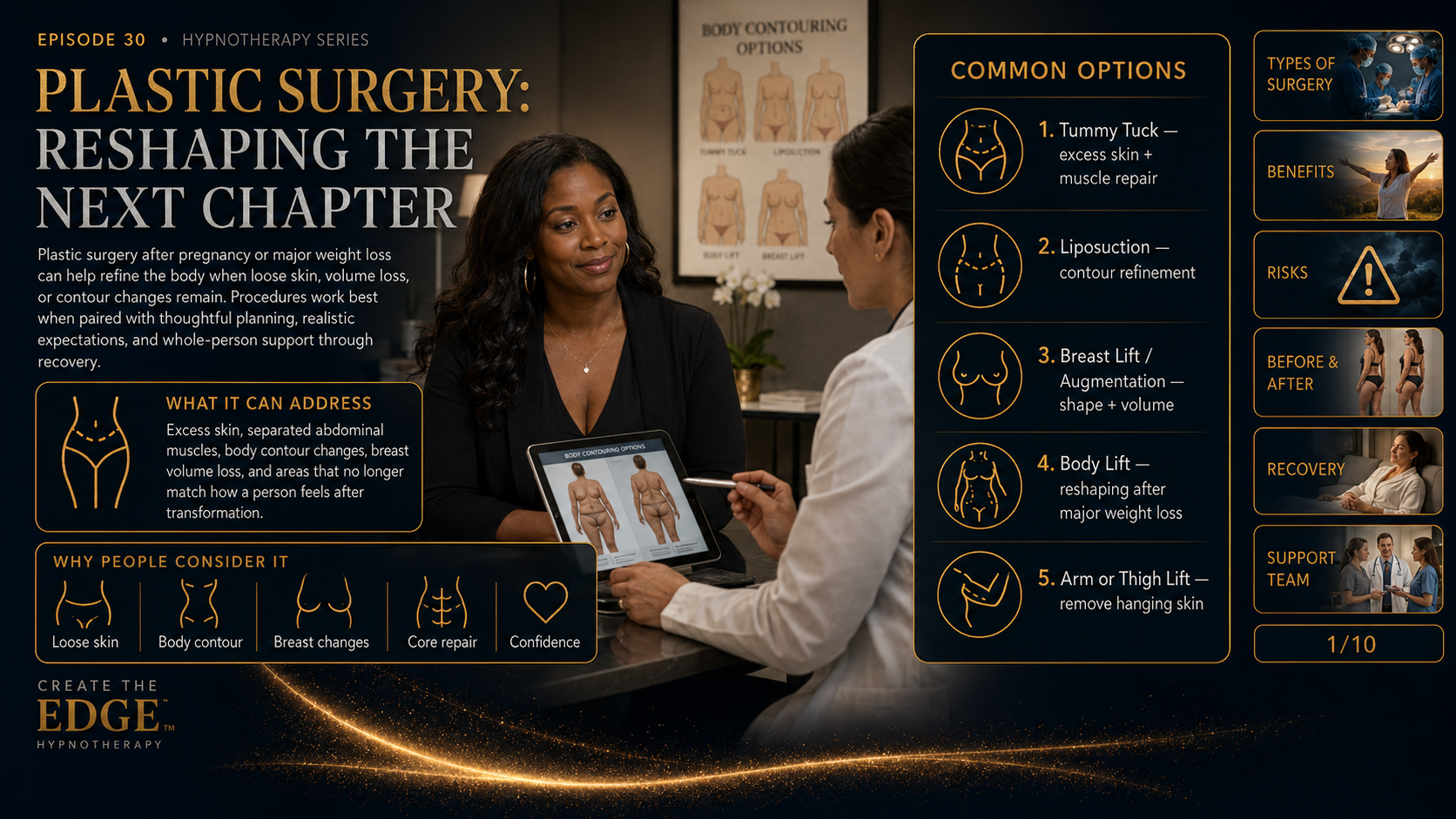
Episode 30 · Slide 1Episode 30 · Slide 1 · plastic surgery: reshaping the next chapter
Episode 30 · Slide 1
PLASTIC SURGERY: RESHAPING THE NEXT CHAPTER
Plastic surgery after pregnancy or major weight loss can help address the physical changes that exercise and nutrition alone cannot fully resolve: excess skin, separated abdominal muscles, loss of breast volume, or contour changes that linger long after the underlying transformation is complete.
These procedures work best when they are part of a thoughtful, comprehensive approach: one that includes realistic expectations, a stable weight, good general health, and genuine support through recovery.
This episode introduces the landscape of body contouring and reconstructive procedures, so that if this is a path you are considering, you can approach those conversations with more clarity, more confidence, and a more complete understanding of what is involved.
Reflect
1. What physical changes from pregnancy or weight loss are you most hoping to address?
2. How long have you been considering plastic surgery as a possibility? What has kept you thinking about it?
3. What do you most hope a procedure could change about how you feel in your body?
4. What fears or concerns do you carry about this type of surgery?
5. What does a realistic, well-supported outcome look like to you?
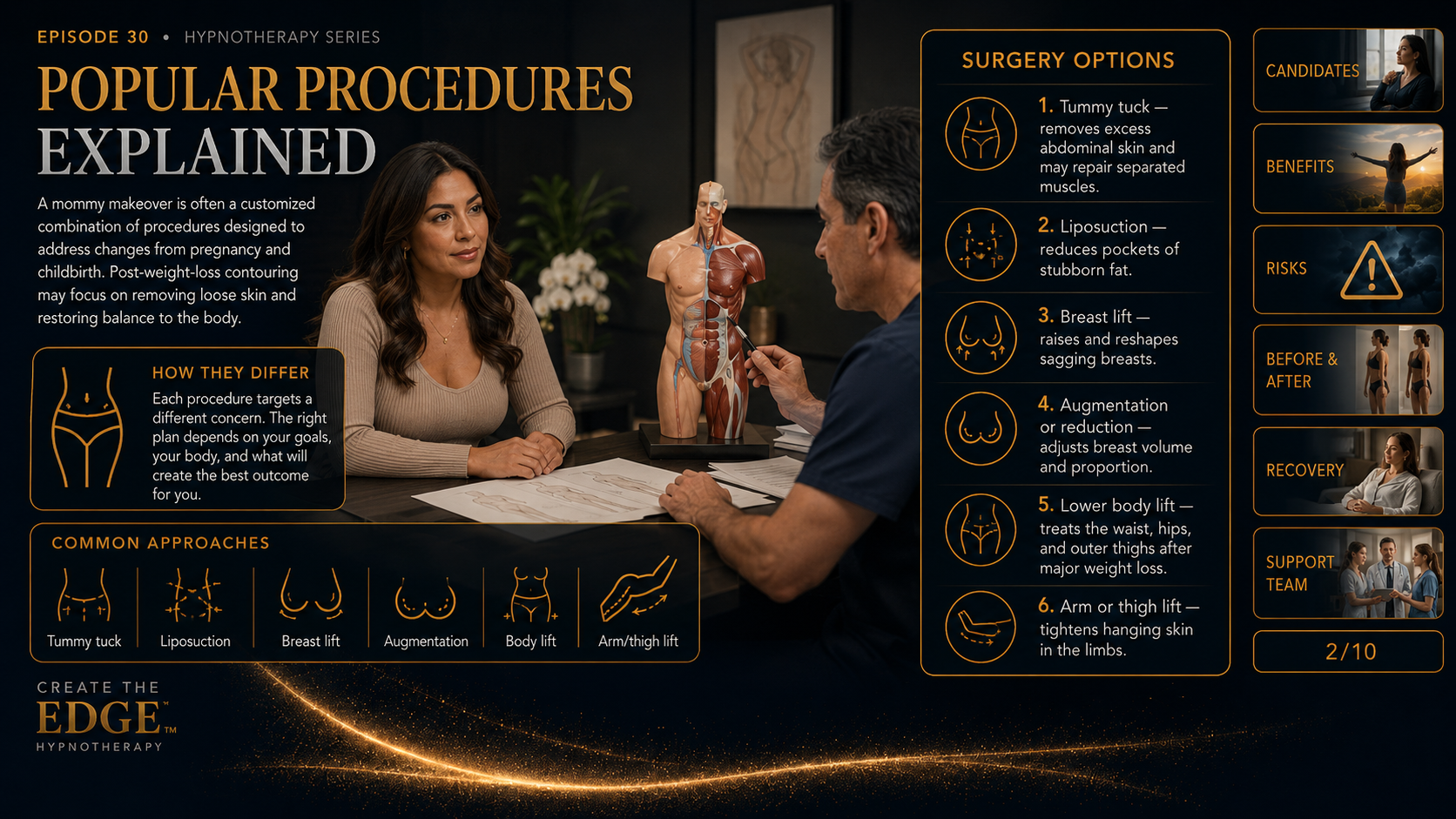
Episode 30 · Slide 2Episode 30 · Slide 2 · popular procedures explained
Episode 30 · Slide 2
POPULAR PROCEDURES EXPLAINED
A mommy makeover is not a single procedure but a customized combination designed to address the specific changes that pregnancy and childbirth can produce. Post-weight-loss contouring similarly focuses on removing the skin and restoring the proportions that significant weight loss leaves behind.
A tummy tuck removes excess abdominal skin and may repair separated core muscles. Liposuction refines pockets of stubborn fat. A breast lift raises and reshapes tissue that has lost volume or dropped with age or weight change. Augmentation or reduction adjusts breast volume and proportion.
A lower body lift addresses the waist, hips, and outer thighs after major weight loss. Arm or thigh lifts tighten hanging skin in the limbs. Understanding which procedures address which concerns helps you enter consultations with more specific, informed questions.
Reflect
1. Which specific procedure or combination feels most relevant to your situation?
2. How do you feel about the idea of staged procedures versus a single combined surgery?
3. What information about a specific procedure would help you feel most prepared for a consultation?
4. What do you need to understand about recovery time and what it requires before making a decision?
5. What would it mean to you physically and emotionally to have the specific concern you carry addressed?
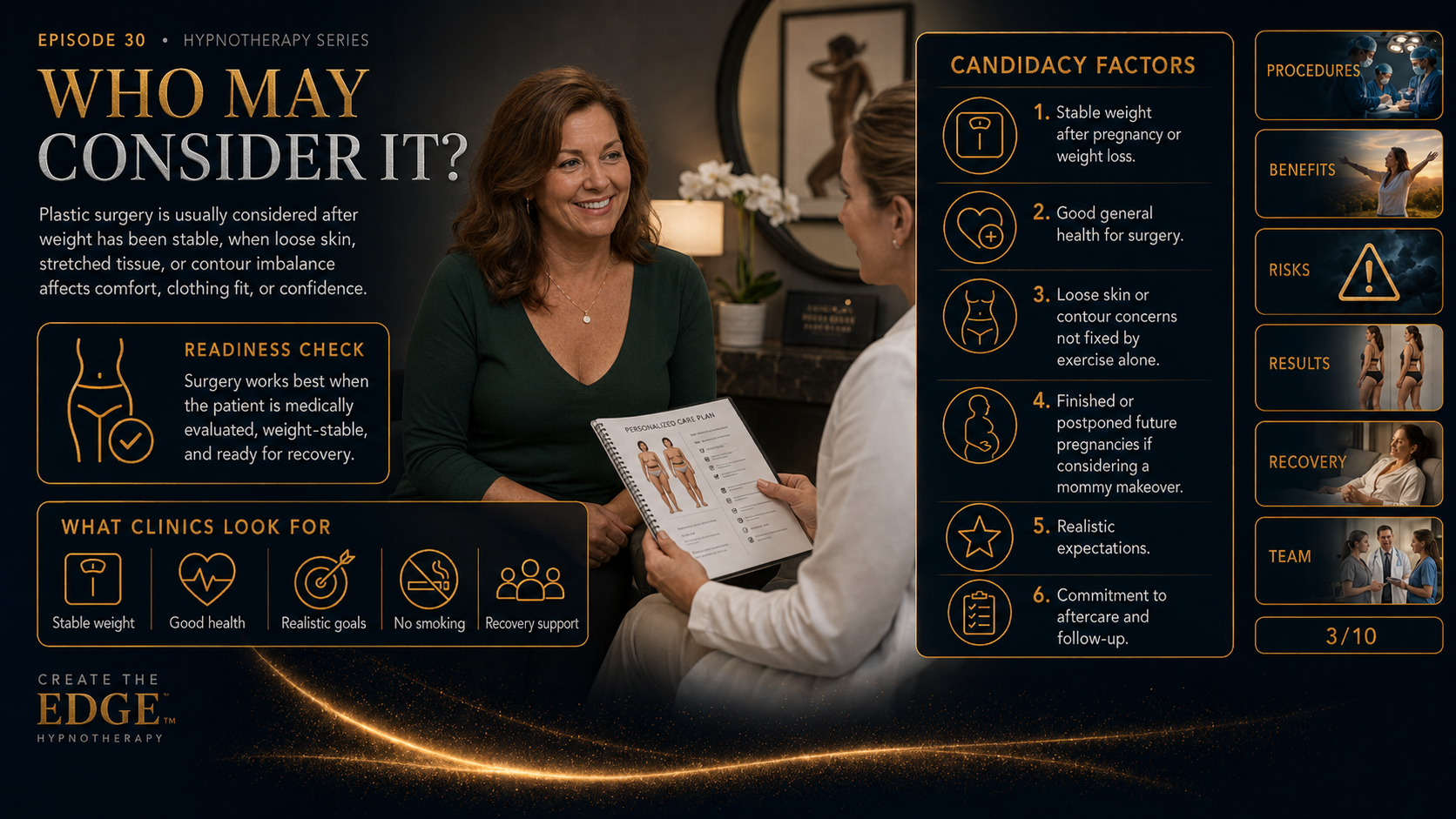
Episode 30 · Slide 3Episode 30 · Slide 3 · who may consider it?
Episode 30 · Slide 3
WHO MAY CONSIDER IT?
Plastic surgery for body contouring is typically considered when weight has been stable for a meaningful period of time, when loose skin, stretched tissue, or persistent contour imbalance is affecting daily comfort, clothing fit, or self-confidence, and when exercise alone has not produced the results the person hoped for.
Good candidacy also requires reasonable general health, a commitment to the recovery process, and realistic expectations about what surgery can and cannot achieve. For those considering a mommy makeover, completing or postponing future pregnancies is generally recommended before proceeding.
A thorough consultation with a board-certified plastic surgeon will help determine whether you are a good candidate, which procedures are most appropriate for your goals, and what a realistic outcome looks like for your specific body.
Reflect
1. Based on what you know, do you believe you might be a good candidate for the procedure you are considering?
2. What aspects of your health or lifestyle would you want to strengthen before pursuing surgery?
3. How stable is your weight currently? How long has it been at its current level?
4. Are there changes to your health or lifestyle that you would want to make before proceeding?
5. What would you want a plastic surgeon to know about your goals, your history, and your concerns in a first consultation?
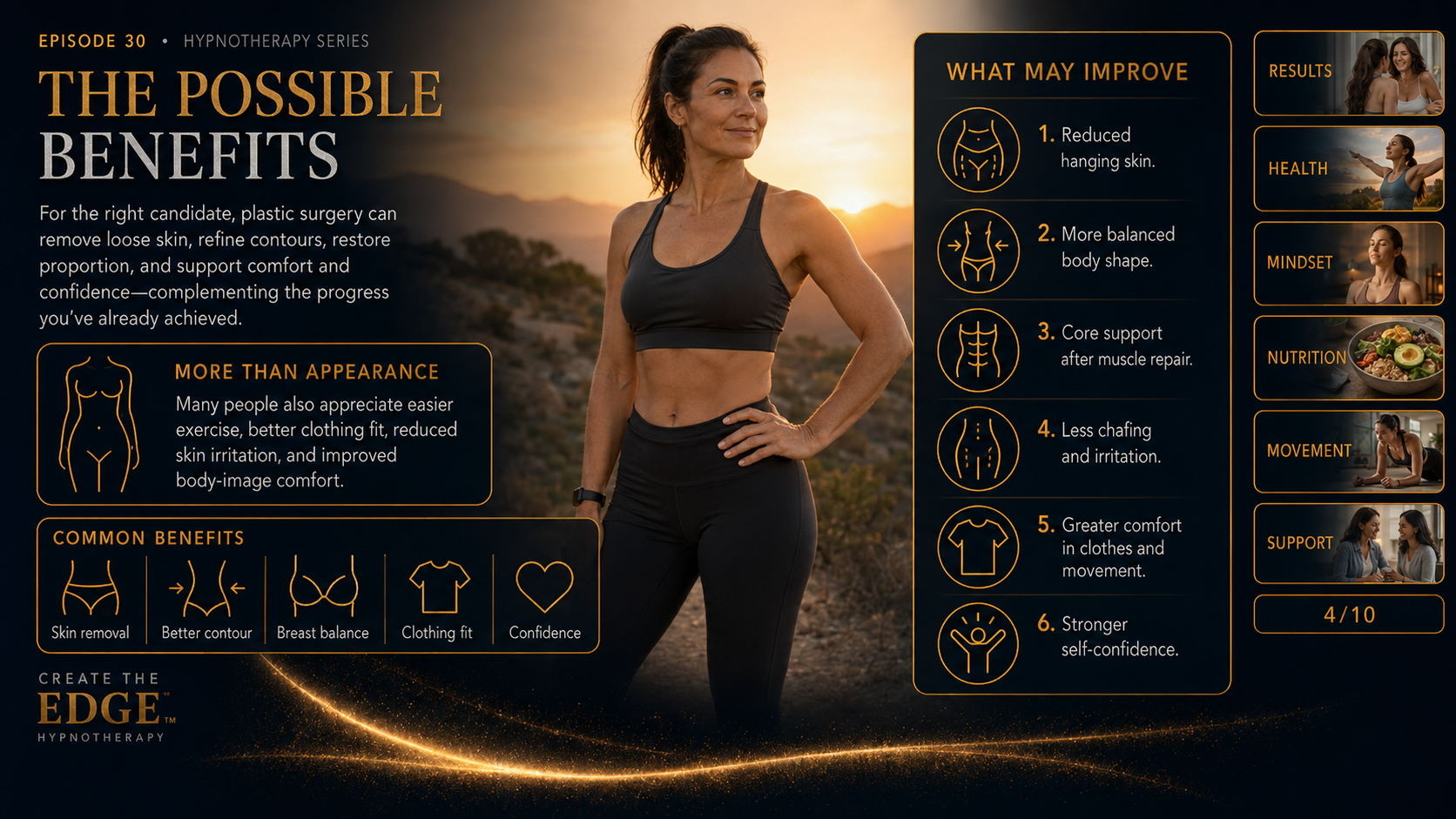
Episode 30 · Slide 4Episode 30 · Slide 4 · the possible benefits
Episode 30 · Slide 4
THE POSSIBLE BENEFITS
For the right candidate, plastic surgery can genuinely complement the transformation you have already achieved. Removing excess skin reduces chafing and irritation, makes movement more comfortable, and allows clothing to fit in ways that better reflect the body underneath.
Many people also experience improvements in core function after abdominal muscle repair, easier exercise after lower body contouring, and a significant shift in body image comfort that has eluded them despite their health achievements.
The psychological benefits, a renewed sense of inhabiting your body comfortably, of seeing the reflection in the mirror align more closely with how you feel inside, can be profound. They are not the reason to pursue surgery, but they are a meaningful dimension of why it matters to many people.
Reflect
1. Which potential benefit matters most to you personally?
2. How has loose skin or contour imbalance affected your daily life, your movement, your clothing, or your self-image?
3. Have you experienced a moment when the physical reality of your body felt misaligned with who you know yourself to be?
4. What would the experience of feeling genuinely comfortable in your body mean for your daily life?
5. How do you imagine your relationship with your body changing after a procedure that addresses the specific thing that troubles you most?
Episode 30 · Slide 5Episode 30 · Slide 5 · understanding the risks
Episode 30 · Slide 5
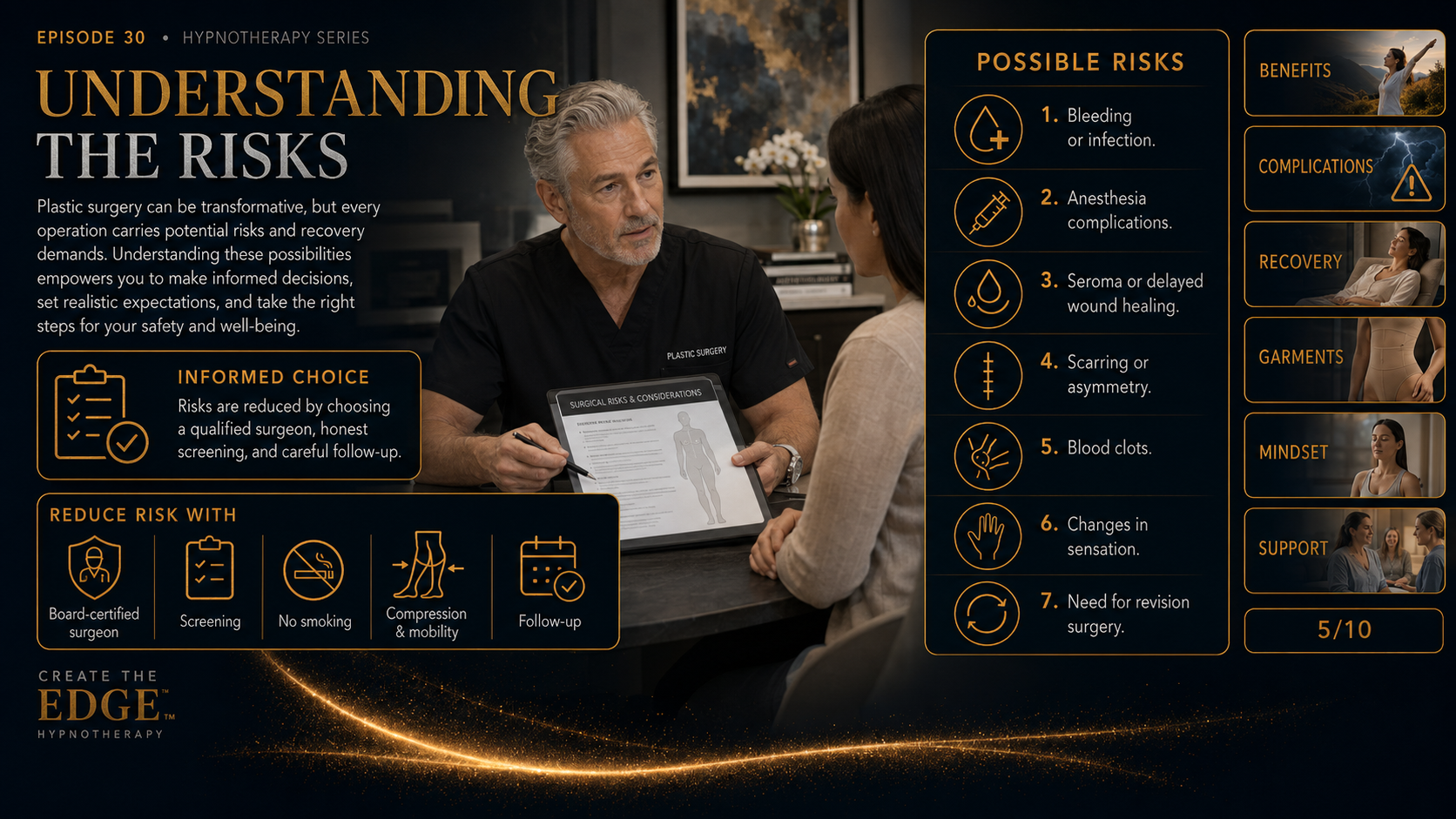
UNDERSTANDING THE RISKS
Every surgical procedure carries risk, and plastic surgery is no different. Bleeding, infection, healing complications, scarring, asymmetry, blood clots, and in some cases the need for revision are all possibilities that an informed patient must understand and accept.
These risks are reduced significantly by choosing a board-certified plastic surgeon with substantial experience in the specific procedure you are considering, by following pre-operative instructions carefully, and by committing to the recovery protocols that protect healing.
Honest, detailed conversations with your surgical team before the procedure are not just useful: they are essential. You deserve to understand exactly what you are agreeing to, what the realistic range of outcomes looks like, and what the recovery will genuinely require from you.
Reflect
1. Which of the risks associated with plastic surgery concern you most?
2. What questions about risk management do you most need answered before you could feel adequately informed?
3. How do you handle uncertainty and fear when facing a significant decision?
4. What support would help you manage anxiety about surgical risk while still thinking clearly?
5. What does truly informed consent, knowing what you are agreeing to in full, feel like for you?
Episode 30 · Slide 6Episode 30 · Slide 6 · before and after: the recontouring journey
Episode 30 · Slide 6
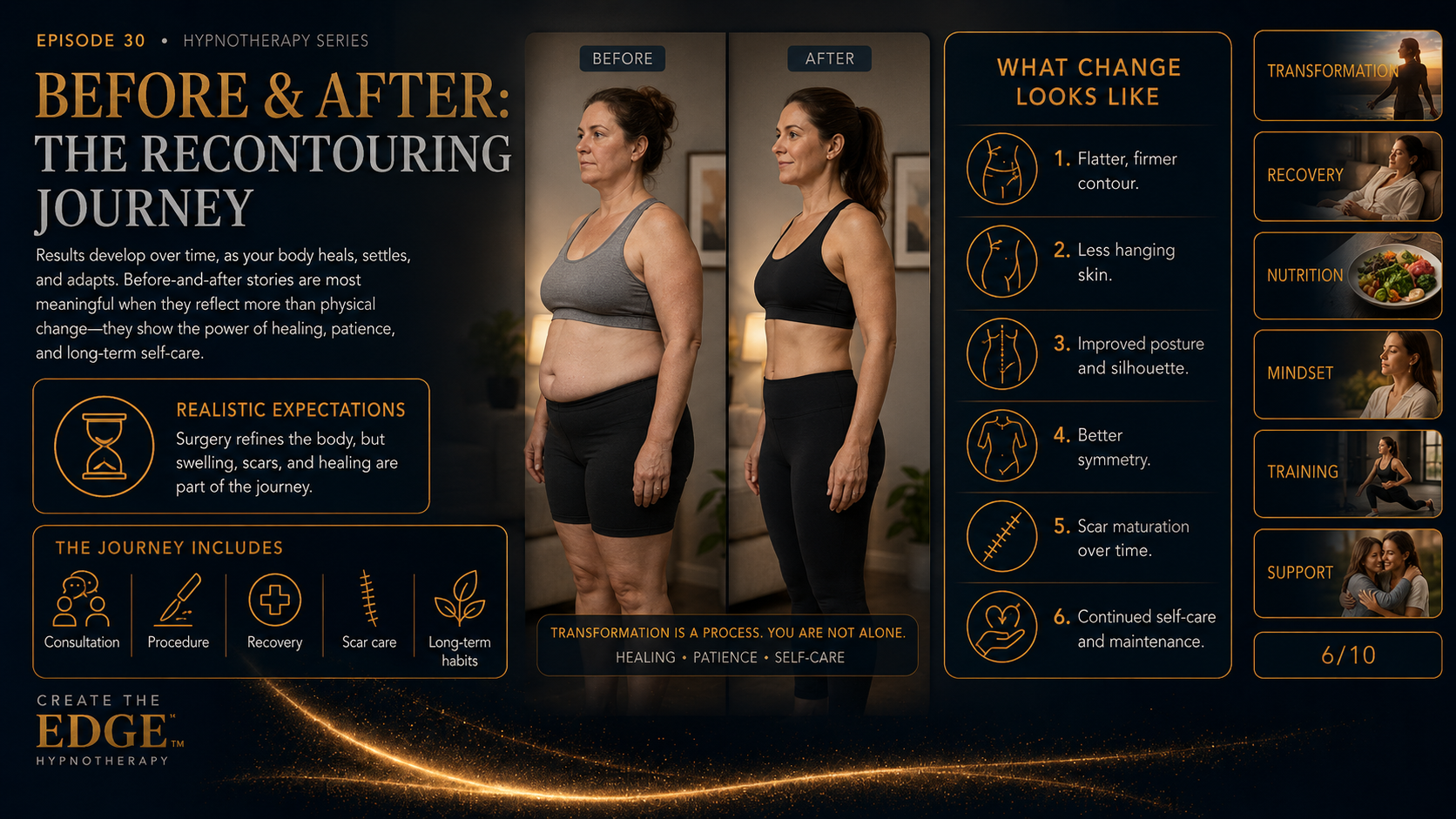
BEFORE AND AFTER: THE RECONTOURING JOURNEY
Recontouring results develop over time, not overnight. The final outcome emerges gradually as swelling resolves, tissues settle, and scars mature. Before-and-after images capture endpoints, but the real journey includes all the in-between: the discomfort, the patience, the careful day-by-day healing.
Realistic expectations are not pessimism. They are preparation. When you know what to expect during recovery, you are far less likely to be frightened or discouraged by what is actually a normal part of healing.
The most powerful before-and-after stories are the ones that tell the full truth: not just the visible physical change but the shift in how a person feels inhabiting a body they worked hard for and then chose to honor.
Reflect
1. What realistic timeline for seeing final results are you prepared for?
2. What aspects of the recovery process feel most daunting to you?
3. How do you typically handle physical discomfort or the frustration of waiting?
4. What support, practical and emotional, would you need during recovery?
5. What does patience with the healing process look and feel like for you?
Episode 30 · Slide 7Episode 30 · Slide 7 · after surgery: recovery and aftercare
Episode 30 · Slide 7
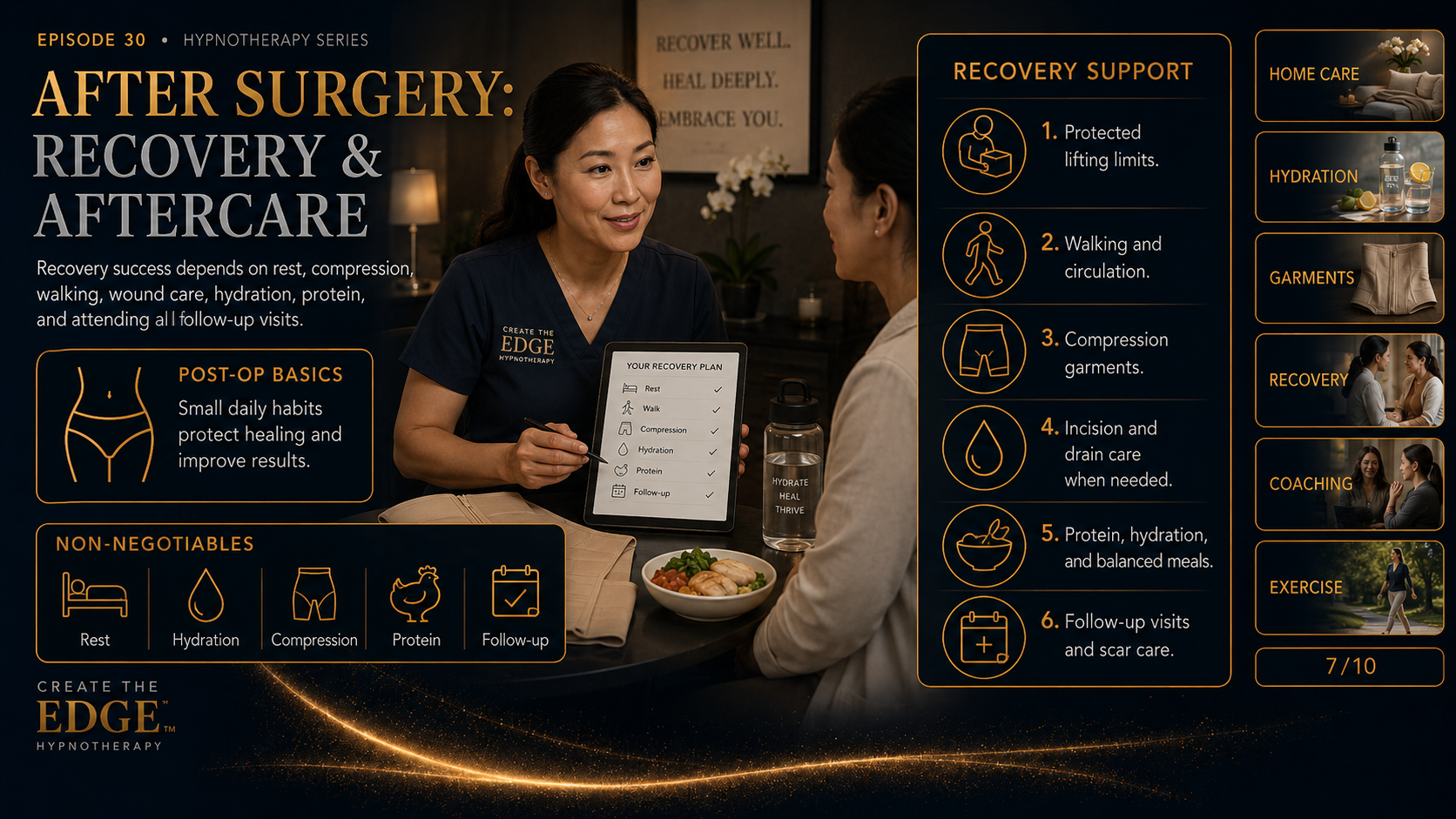
AFTER SURGERY: RECOVERY AND AFTERCARE
Post-surgical success depends on a recovery process that is followed carefully and consistently. Protected lifting limits, daily walking for circulation, compression garments, proper wound and drain care when needed, adequate protein and hydration, and attendance at all follow-up appointments are not optional recommendations. They are the foundation of a good outcome.
Recovery is not passive. It requires active, daily participation in the healing process. The patients who heal best are those who take their aftercare as seriously as they took the decision to have surgery.
Scar care, which typically begins once incisions are fully healed, is a longer-term commitment that significantly affects the final appearance of surgical scars. Starting scar management early and continuing it consistently produces the best results.
Reflect
1. How do you typically handle medical instructions during recovery from illness or injury? Are you a careful patient?
2. What would you need to arrange in your life to protect adequate recovery time?
3. What concerns do you have about the practical aspects of post-surgical care?
4. Who in your life would be able to help you during the weeks immediately following surgery?
5. What does taking excellent care of yourself during a recovery period look and feel like for you?
Episode 30 · Slide 8Episode 30 · Slide 8 · the mindset side of healing
Episode 30 · Slide 8
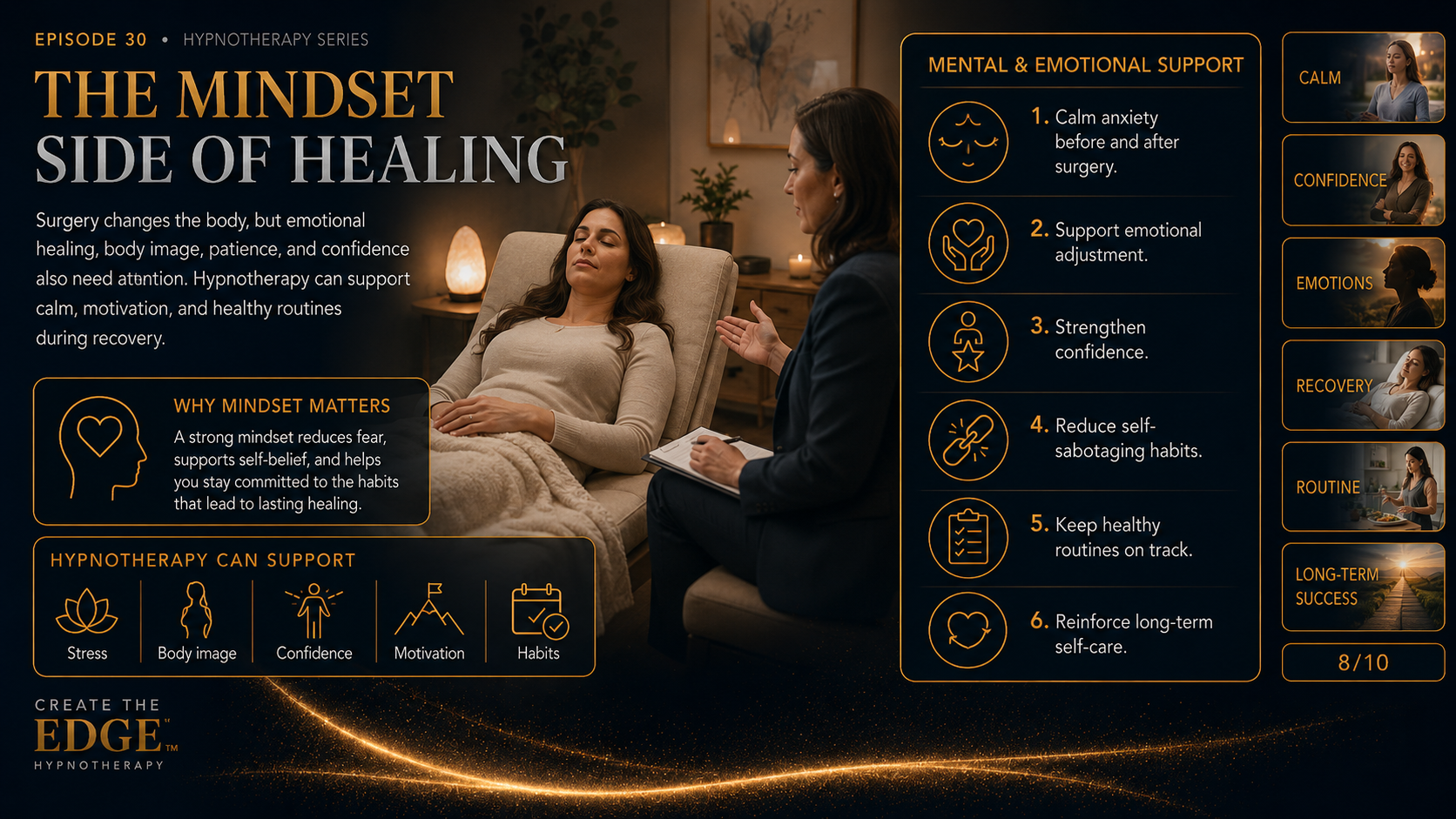
THE MINDSET SIDE OF HEALING
Surgery changes the body. But emotional healing, body image adjustment, patience with the process, and the maintenance of healthy routines also need active attention. The physical result is only as lasting as the habits, beliefs, and self-image that surround it.
Hypnotherapy can support the surgical journey in meaningful ways: calming anxiety before and after the procedure, supporting emotional adjustment to a changing body, reinforcing confidence and motivation, and helping sustain the healthy routines that protect and enhance the surgical result.
The most enduring outcomes are those where the inner work kept pace with the outer change, where the person who emerged from surgery was someone who genuinely knew and cared for themselves, inside and out.
Reflect
1. What emotional support do you anticipate needing during a surgical healing process?
2. How do you feel about your body right now, the body that has already done so much?
3. What would it mean to feel proud of your body at every stage of this journey, including during recovery?
4. How might hypnotherapy or other mindset support help you navigate the emotional dimensions of this change?
5. What inner belief, if shifted, would most support your healing and your long-term relationship with your body?
Episode 30 · Slide 9Episode 30 · Slide 9 · success takes a whole team
Episode 30 · Slide 9
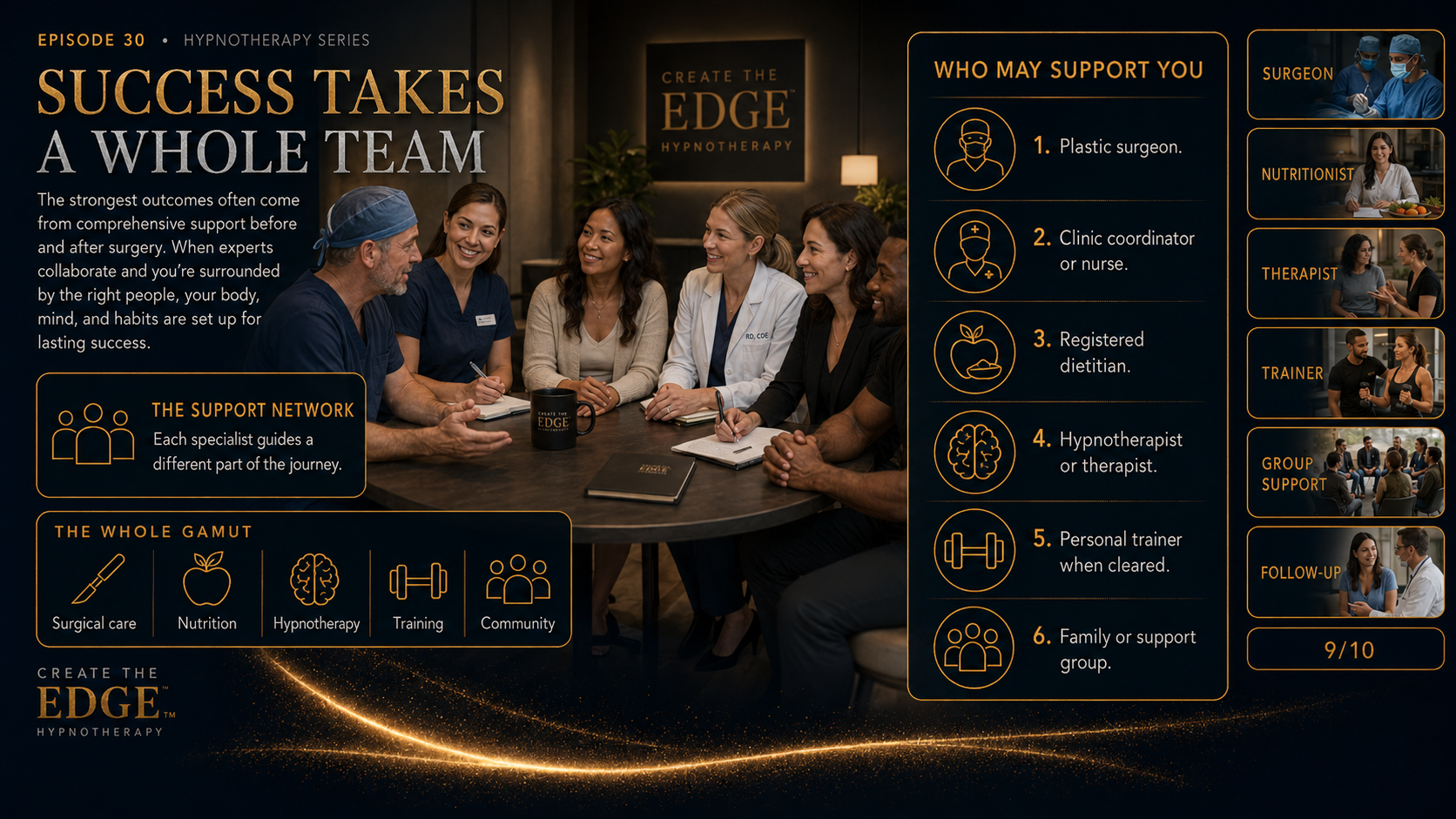
SUCCESS TAKES A WHOLE TEAM
The strongest plastic surgery outcomes come from comprehensive support before and after the procedure. A board-certified plastic surgeon, a clinic coordinator, a registered dietitian to support healing nutrition, a hypnotherapist or therapist for the emotional dimensions, and a personal trainer when cleared to resume movement: each specialist guides a different part of what a successful journey requires.
You do not have to navigate this alone. And the research is clear that patients who have robust support networks have better outcomes, better adherence to aftercare, and higher satisfaction with their results.
Building your team before surgery means knowing where to turn at every stage. That preparation is itself a form of self-care.
Reflect
1. Who is currently part of your health and wellness support team?
2. What gaps would a surgical journey reveal in your current support structure?
3. How comfortable are you coordinating care across multiple providers?
4. What kind of community, whether online, local, or personal, would matter most to you during recovery?
5. What would a well-supported version of your surgical journey look and feel like from beginning to final result?
Episode 30 · Slide 10Episode 30 · Slide 10 · is plastic surgery right for you?
Episode 30 · Slide 10
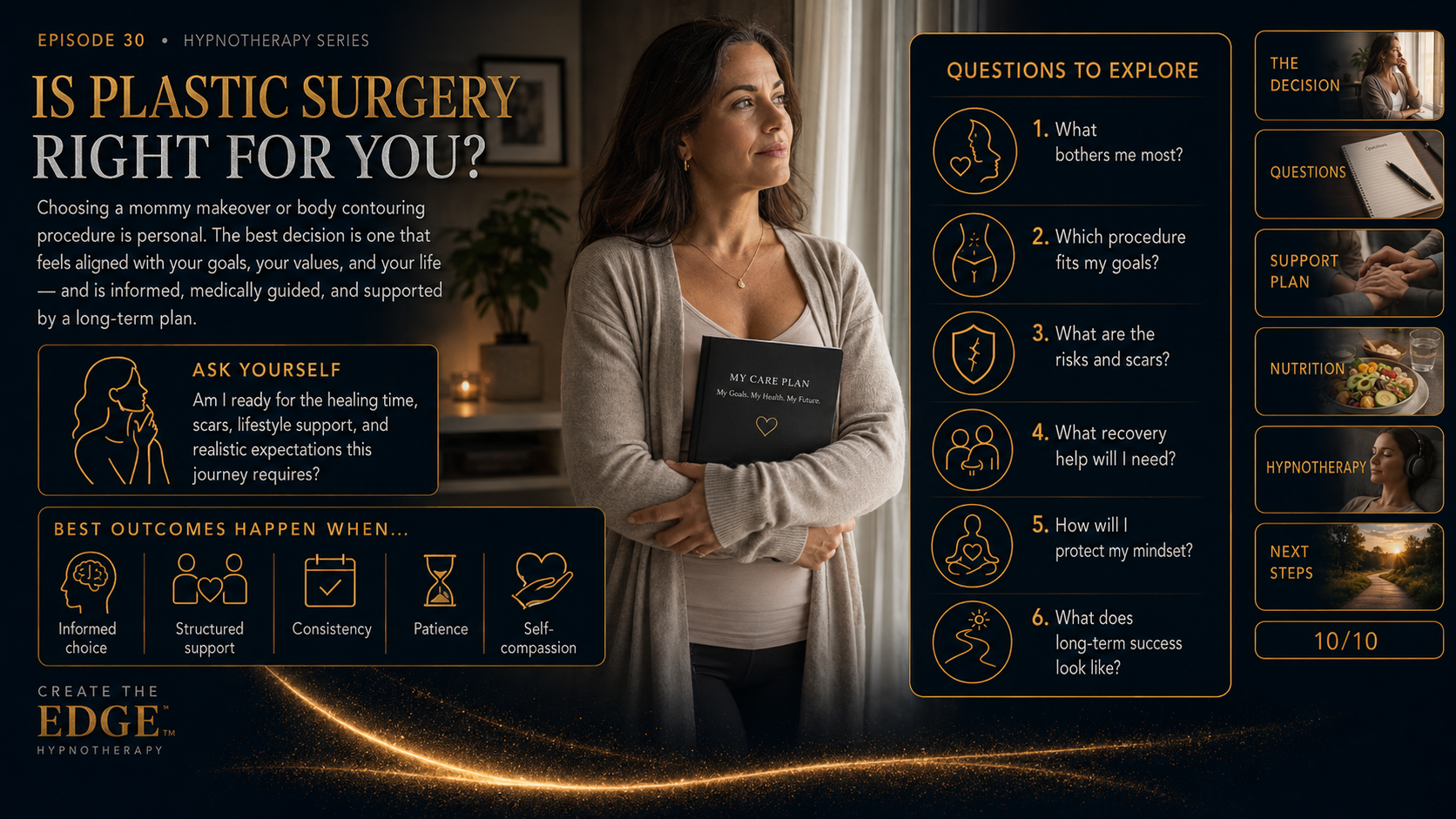
IS PLASTIC SURGERY RIGHT FOR YOU?
Choosing a mommy makeover or body contouring procedure is a deeply personal decision. The right choice is not the most dramatic one or the fastest one. It is the one most aligned with your actual goals, your readiness for the recovery process, your values, and your vision of the life you want to inhabit.
The questions worth sitting with are not only which procedure and when. They are also: am I choosing this from a place of self-care or self-punishment? Am I ready to be patient with a healing process that will take time? And am I prepared to maintain the habits that will protect and enhance this investment?
This episode has offered a foundation for those reflections. The next steps are yours, in honest conversation with yourself and with the professionals best equipped to help you make the decision that truly serves you.
Reflect
1. Where are you in your thinking about plastic surgery right now?
2. What would you need to feel, know, or have in place before making a decision that felt right for you?
3. What is the most important question you want answered before taking any next steps?
4. How does this decision connect to your larger vision of who you are becoming and how you want to live?
5. What is your next concrete step, whether that is research, a consultation, or simply more time to reflect?